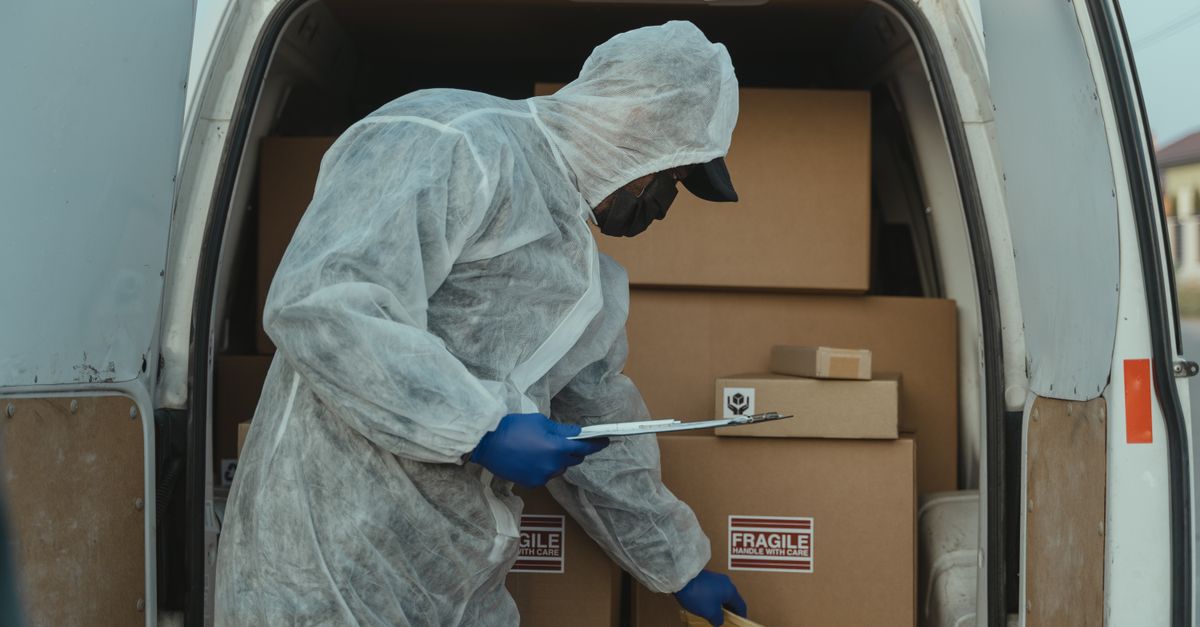
What should I do when tracking says delivered but the customer never got it?
What a Delivered Scan Actually Means
A delivered scan means a driver pressed a button on a handheld device at a location their GPS believed was correct. That is the whole claim being made.
It does not mean a person accepted the parcel. It does not mean the parcel was left somewhere safe. In many cases it does not even mean the driver was at the right house, because a mis-scan one address over is one of the most common failures in last mile delivery.
There are also scans that happen before the delivery. Some drivers batch-scan a van of parcels as delivered at the start of a route to save time, which produces a delivered status hours before the parcel physically arrives. That single practice explains a large share of "it says delivered but nothing is here" messages.
So the scan is evidence, not proof. Treat it as one data point among several, which is how most experienced OpoShop merchants handle it.
The First Response That Solves Most Cases
Your first reply should do three things: believe them, give them something specific to check, and tell them exactly what happens next.
Believing them matters because the alternative sets the wrong tone. If your opening message implies the customer is mistaken or lying, you have turned a delivery problem into a relationship problem, and the cost of that is much higher than a replacement. It is the single biggest lever OpoShop merchants have in these conversations.
Giving them something to check is genuinely useful, because a meaningful share of parcels are found. Common places are behind planters or bins, in a side passage or garage, with a neighbour, at a building's mail room or front desk, and occasionally back at the local depot after a failed attempt.
Telling them what happens next removes the anxiety. A customer who knows you will replace it if it does not turn up by Thursday will wait until Thursday. A customer who does not know will message you three more times.
Here is a first response that works:
- Open by believing them: Say you are sorry it has not arrived and that you will sort it out.
- Give a short check list: Around the door, with neighbours, the building's front desk, and any safe place they have used before.
- Confirm the address: Repeat the shipping address on the order so a typo surfaces immediately.
- Set a deadline: Tell them you will replace or refund if it has not appeared by a specific day.
- Never ask them to file the carrier claim: That is your relationship with the carrier, not theirs.
How Long to Wait Before Replacing
Two business days after the delivery scan is the practical answer for most OpoShop stores, and it is long enough for the majority of late scans to resolve themselves.
Parcels that were batch-scanned early usually appear the same day or the next. Parcels delivered to a neighbour usually surface within a day once the customer asks around. Parcels genuinely stolen or genuinely lost do not come back at all, and waiting longer just delays the inevitable while the customer's patience drains.
There is a real cost to waiting too long. Every extra day is another support message, another chance the customer opens a dispute with their bank, and another day they spend feeling ignored. A two day rule keeps the process short enough that people stay calm.
Publish the number. A claim window and a wait period that customers can read set expectations before anything goes wrong, and a customer who knew the rule in advance almost never argues with it.
How to Handle the Claim Step by Step
The whole process should take you about three minutes per case once you have a repeatable sequence.
Two of those steps carry most of the weight.
1. Verify it against the real order
Before anything else, confirm the person messaging you is the person who placed the order. Match the order number and the email address on the OpoShop order, not just the name in the message.
This is not about suspicion. It is about making sure you are looking at the right order and the right address, and it takes seconds. It also quietly closes the door on the small number of people who try to claim against an order that is not theirs.
2. Decide quickly and completely
When your deadline arrives, make a clean decision. Reship or refund, tell the customer, and close it out.
Half decisions are the expensive path. Asking for a police report on a $60 order, requesting more photos, or leaving the case open while you think about it all cost more in support time and goodwill than the replacement itself. If the amount is small enough that you would have replaced it eventually, replace it now.
Reship vs Refund vs Carrier Claim
Once you have decided the parcel is gone, there are three ways to resolve it, and the right one depends on the order and the customer.
| Option | Best use case | Why it works | Watch-out |
|---|---|---|---|
| Reship the order | The customer still wants the product and it is in stock | Keeps the sale, keeps the customer, costs you goods plus postage | A second parcel to the same address can fail the same way |
| Refund the order | Out of stock, the moment has passed, or trust is damaged | Fastest clean ending and no second delivery risk | You lose the sale entirely, including the margin |
| File a carrier claim | High value shipments with declared value | The carrier may reimburse the loss | Slow, and porch theft after a delivery scan is usually excluded |
Reshipping is the default for most stores because it preserves the sale and the relationship. It is also usually cheaper than a refund, since you are out cost of goods rather than full retail.
Refunding is the right call when the customer needed the item for a specific date that has passed, when you cannot restock quickly, or when the customer simply wants out. Forcing a reship on someone who has lost confidence just delays a refund request.
Carrier claims are worth filing on high value shipments, and worth skipping on ordinary ones. If the parcel was scanned as delivered, most carriers consider their obligation met, so a claim on a $70 order is usually time you will not get back.
Preventing the Next One
Most "delivered but missing" cases cluster, and the clusters are fixable.
Track the carrier and the region on every case alongside the OpoShop order it belongs to. If one carrier in one metro area is producing most of your problems, that is a routing decision, not a customer service problem. Switching a region to a different service is often cheaper than the replacements.
Offer delivery options that reduce exposure. Signature on delivery for high value orders, pickup point delivery in dense urban areas, and a delivery instructions field so customers can nominate a safe place all cut the failure rate meaningfully.
Set expectations in your shipping emails. A line telling customers when the parcel is due and suggesting they arrange for someone to collect it does more than it sounds, because the parcels that go missing are usually the ones that sit out all day.
And fund the ones you cannot prevent. A protection fee at checkout turns the residual failures into a budgeted cost rather than a surprise, which is why so many OpoShop merchants add one after their first bad month.
What Not to Do
Three responses reliably make things worse, and all three are tempting when you are tired.
Do not tell the customer the tracking says delivered so there is nothing you can do. They already know what the tracking says, and they are messaging your OpoShop store precisely because it is wrong. That reply reads as a refusal, and it is the single most common trigger for a chargeback on a delivered order.
Do not demand a police report for a routine claim. It is a real burden to place on someone for a modest order, most people will not do it, and the ones who do will resent it. Save that request for genuinely high value cases where it is proportionate.
Do not go silent while you decide. A customer who gets no reply for four days assumes you are stalling. Even an interim message saying you are looking into it and will confirm by Thursday keeps the situation calm.
Best answer: Believe the customer, ask them to check with neighbours and around the property, confirm the shipping address, and give it two business days from the delivery scan. If it has not turned up, reship or refund without demanding more evidence. A delivered scan is one driver pressing a button, not proof of receipt, and for most OpoShop stores the replacement costs far less than the dispute, the negative review and the lost customer.
If these cases are becoming regular, funding them with a protection fee is the change that makes them sustainable.
FAQs
Am I legally responsible if tracking shows delivered?
It depends on your jurisdiction and your own terms, and in many places the risk of loss passes to the buyer on delivery. In practice most stores replace anyway, because the cost of a replacement is far lower than the cost of a chargeback and a public complaint.
Should I ask the customer for a police report?
Only on high value orders where the request is proportionate. For an ordinary order it creates a burden most honest customers will not clear, and it signals that you do not believe them, which is rarely worth what it saves.
How do I tell an honest customer from a fraudulent one?
You mostly cannot on a single case, so do not try. Look at patterns instead: repeat claims from the same customer or the same address are the real signal, and a claim limit per order handles the rest without punishing everyone else.
Will the carrier reimburse me for a stolen package?
Usually not once the parcel has a delivery scan, because the carrier considers the delivery completed. Declared value coverage on a high value shipment is different and worth pursuing, but for ordinary orders a carrier claim is rarely productive.
Should I reship to the same address?
Often yes, but ask first. If the parcel was stolen from an exposed doorstep, offer a signature service, a pickup point, or a different address. Sending a second parcel into the same failure is how one problem becomes two.
How can I reduce these cases?
Track which carriers and regions produce them, offer signature or pickup point options on higher value orders, and add a delivery instructions field so customers can nominate a safe place. Then fund the ones you cannot prevent with a small protection fee at checkout.
Ready to stop absorbing the cost of parcels that vanish after delivery? Set protection up where your store already sells.